Career Guides
Career Spotlight: What It's Really Like to Be a Senior Flight Dynamics Engineer
We sit down with Alejandro Sanchez Duran, a Senior Flight Dynamics Engineer at ispace, to learn what it takes to fly spacecraft to the Moon and handle the reality of spaceflight missions.
Part of How to Get a Job in the European Space Industry

The Find a Space Job Team
The Best European Space Industry Job Board
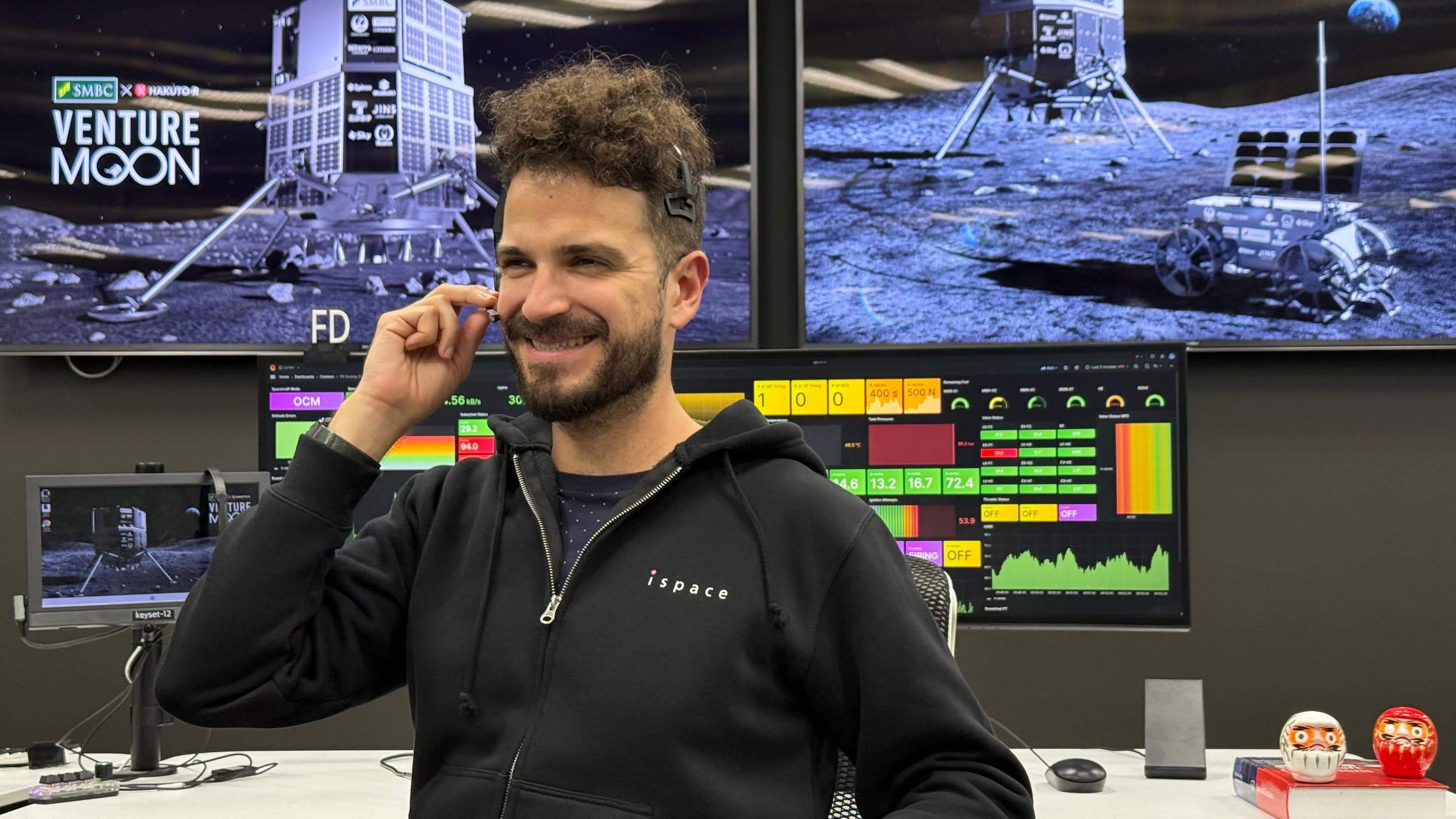
Alejandro Sanchez Duran, Senior Flight Dynamics Engineer at ispace
Key Insights from Alejandro:
- A Day in the Life: "A typical week in Tokyo is a good balance of work, training, and exploring the city. Before launch, I oversee the development of our Flight Dynamics System and training programs. During the mission, I take part in real-time operations, performing Orbit Determination and Maneuver Planning."
- Essential Skill: "Python programming, understanding of Least Squares Estimator and Kalman Filter for Orbit Determination. But just as important are soft skills: being good at talking to people, understanding what they need, and explaining very technical subjects in a simple and digestible way."
- Top Advice: "Do not wait to feel ready because that moment will never come. If a role feels slightly out of your league or too far away geographically, that is usually a sign that you should apply, not the opposite. Take risks, jump early, and trust that you'll figure things out along the way."
Can you briefly describe your role as a Senior Flight Dynamics Engineer? For those who don't know, what specific part of the mission are you responsible for ensuring goes right?
Broadly speaking, the task of a Flight Dynamics Engineer is to ensure that:
- The trajectory provided by the Mission Analysis team can be executed from an operational standpoint.
- Our team and the tools we use are fully prepared and certified for the mission.
- We successfully fly the spacecraft along the nominal trajectory all the way to the end of the mission.
As a Senior Flight Dynamics Engineer, my responsibilities span both the essential but sometimes tedious work (documentation, organizing project milestones, allocating tasks) and the more technical and exciting work (developing procedures, coding our Flight Dynamics System, and sitting on-console during spacecraft operations).
Before launch, I oversee the development of our Flight Dynamics System, the procedures used to operate it, and the training program for the engineers who will fly the spacecraft. During the mission, I take part in real-time operations, performing Orbit Determination and Maneuver Planning to estimate the lander’s position and velocity, and provide critical information to other teams. I also report our progress, trajectory changes, and upcoming maneuvers to the Mission Director.
You moved from Europe to Japan and changed your area of focus. What was the hardest part of that transition? Did you feel "ready" when you applied, or was this a case of "aiming higher" before you felt 100% qualified?
My academic path brought me from Valencia (Spain), where I obtained a Bachelor’s in Aerospace Engineering, to Toulouse (France), where I completed a Master of Science in Global Navigation Satellite Systems (GNSS) and Telecommunications. I had a stable job at Thales Alenia Space as a GNSS engineer working on Orbit Determination algorithms for Galileo, the European GPS. Life in Toulouse was wonderful, and I was lucky to share it with a great group of colleagues and friends, but I quickly felt trapped by routine and by the slow pace typical of a large aerospace company.
While looking for alternatives, I discovered the Vulcanus in Japan internship program, which includes four months of intensive Japanese language study followed by an eight-month internship. ispace was one of the host companies and offered the chance to join their Flight Dynamics team to help design and build the system that would fly their first lunar lander. I applied immediately, and was incredibly fortunate to be selected among thousands of applicants.
I transitioned into astrodynamics and space navigation with very limited prior knowledge, fully aware that I’d need to work hard to catch up and become useful to the team. The cultural shock was also enormous: new language, new norms, and a completely unfamiliar environment. I wasn’t truly “ready” for either challenge, but I’ve always believed in taking leaps of faith: in the worst case, I would return home with a new story to tell!
Getting used to Japan and its people turned out to be easier than expected; the technical challenges, however, were significantly harder. Still, it would have been a mistake not to apply just because I felt underqualified. A strong attitude, willingness to learn, and the ability to work autonomously and solve problems go much further than having all the knowledge upfront.
Space is hard, and ispace has been bold enough to try (and fail) publicly. How do you and the team handle the days immediately after a hard landing? How do you stay optimistic and get back to work for the next attempt?
The days following a hard landing are extremely tough. The wound is still fresh, yet our job isn’t over: we continue working in the Mission Control Center to analyze the final hours of the mission, understand what went wrong, and extract lessons for future attempts. Everything reminds you of those last moments and naturally leads you to question what you could have done differently.
Fortunately, I’m surrounded by incredibly resilient, optimistic, and fun colleagues who inspire and lift each other up during difficult times. Working with such talented and kind-hearted people brings out the best in me and makes it easier to move forward and set our sights on the Moon once again. Our management team also plays a critical role by taking ownership of mistakes, acknowledging our efforts, and ensuring the whole team pulls in the same direction.
We all understand that space is hard for a reason, and that even the smallest error can cost an entire mission. The ability to accept failure, learn from it, laugh together and keep going is what makes our team and our company so unique.
What does a typical week look like for you in Tokyo? Is there a big difference in work culture compared to your time in Europe? And outside of the office, what has been the biggest adjustment or favorite part of life in Japan?
A typical week in Tokyo is a good balance of work, training, and exploring the city. I usually go to the office because being physically present makes it much easier to discuss design ideas, get quick inputs from other teams, and keep everyone aligned. The office atmosphere is friendly and collaborative, and small conversations often turn into useful insights for the mission.
Outside of work, I try to stay quite active. I hit the gym, go kickboxing, run along the river, and work on small side projects (mostly not related to space, which helps clear my mind). My weekends are reserved for friends and short trips outside of Tokyo. One of the best things about living here is how quickly you can escape the city: one train ride and you're surrounded by mountains, forests and stunning landscapes.
In terms of work culture, ispace is far more flexible than what people usually imagine when they think of Japan. Our schedules adapt to our needs, and everything is fine as long as we deliver the work, meet deadlines, and keep the mission moving forward. It actually feels very similar to what I experienced in Europe, partly because we have many European colleagues. That said, the months leading up to launch can be intense: the pressure increases, timelines get tighter, and overwork sometimes becomes unavoidable. It’s part of the reality of trying to reach the Moon!
The biggest adjustment outside of work has been the cultural and linguistic barrier. The norms, communication style and implicit expectations in Japanese society are very different from anything I had experienced before. It can be frustrating at times, and it definitely limits how deeply you can integrate unless you master the language. But the trade-off is worth it: Japan’s nature is spectacular, Tokyo has almost everything you can imagine, and the onsen (hot spring) culture is one of my favourite discoveries.
What are the 3-5 essential skills or tools you use to solve flight dynamics problems?
On the technical side, all our internal Flight Dynamics code is written in Python. We also use an external library developed by JPL that helps us with astrodynamics calculations and mission analysis tasks. Mathematically, two key concepts we need to master are the Least Squares Estimator and the Kalman Filter. These are the backbone of Orbit Determination, the process of figuring out the spacecraft’s position and velocity.
But just as important as the technical tools are the soft skills. Flight Dynamics sits at the intersection of many other subsystems, so you need to be good at talking to people, understanding what they need, and helping unblock their progress. You also need to be able to explain very technical subjects in a simple and digestible way; especially during real-time operations where clarity is everything.
What is your advice to a European engineer who feels "stuck" or afraid to apply for a role that seems out of their league (or literally on the other side of the planet)?
My biggest advice is simple: do not wait to feel ready because that moment will never come. If a role feels slightly out of your league or too far away geographically, that is usually a sign that you should apply, not the opposite. Taking the leap is terrifying, but staying still can be worse. Moving abroad and travelling gives you perspective; it makes the world feel surprisingly small and shows you how many options you actually have. You learn a lot about yourself, what you want, and what you are capable of when you're far outside your comfort zone. So apply, take risks, jump early, and trust that you’ll figure things out along the way.
What are you most excited about for the future of ispace or the lunar economy in general?
For the future, I’m excited about the return to the Moon; not just robotic missions, but the upcoming human presence as well. We are heading toward a second golden era of space exploration, and I hope it reignites public excitement about space. Europe also has a real chance to play a major role this time, and I’m genuinely thrilled to see a new generation of European engineers, scientists, and astronauts contributing to the lunar economy.
Another exciting trend is the rise of alternatives to SpaceX and the possibility of increased competition. New Glenn has shown that the gap might not be as unreachable as people thought (even though there’s still a long way to go). I would love to see a strong European alternative emerge too. Europe’s independent access to space would open many doors for future engineers who want to build their careers from the continent.
Connect with the Expert
A huge thank you to Alejandro for sharing his career journey and insights with our community. You can connect with him directly on LinkedIn.
Launch Your Mission
For Professionals: Inspired by Alejandro's journey? See all open Engineering roles and Operations roles on Find a Space Job.
For Companies: Hiring for a role like this? Post a job to reach thousands of qualified specialists like Alejandro.
Tags:
interviewflight dynamicsastrodynamicsspace operationsengineering
Our mission is to connect the best talent with the most innovative companies in the European space sector. We centralise opportunities to make hiring and job searching faster and more effective.